


Every fall, our Flower Mound office gets the same question a few dozen times: “Is this a cold, or is it allergies?” The weather cools off, the patio finally feels nice again, and then the sneezing starts. For a lot of people it doesn’t really stop until spring.
That’s not bad luck. Fall allergies in Texas follow a predictable pattern, and North Texas gets more than its share. Below we explain what’s in the air this time of year, how to tell allergies from a cold or sinus infection, what helps, and when it’s time to come in.
Why Fall Allergies Hit So Hard in North Texas
Most people think of spring as allergy season. In the Dallas–Fort Worth area, fall can be just as rough, for three reasons.
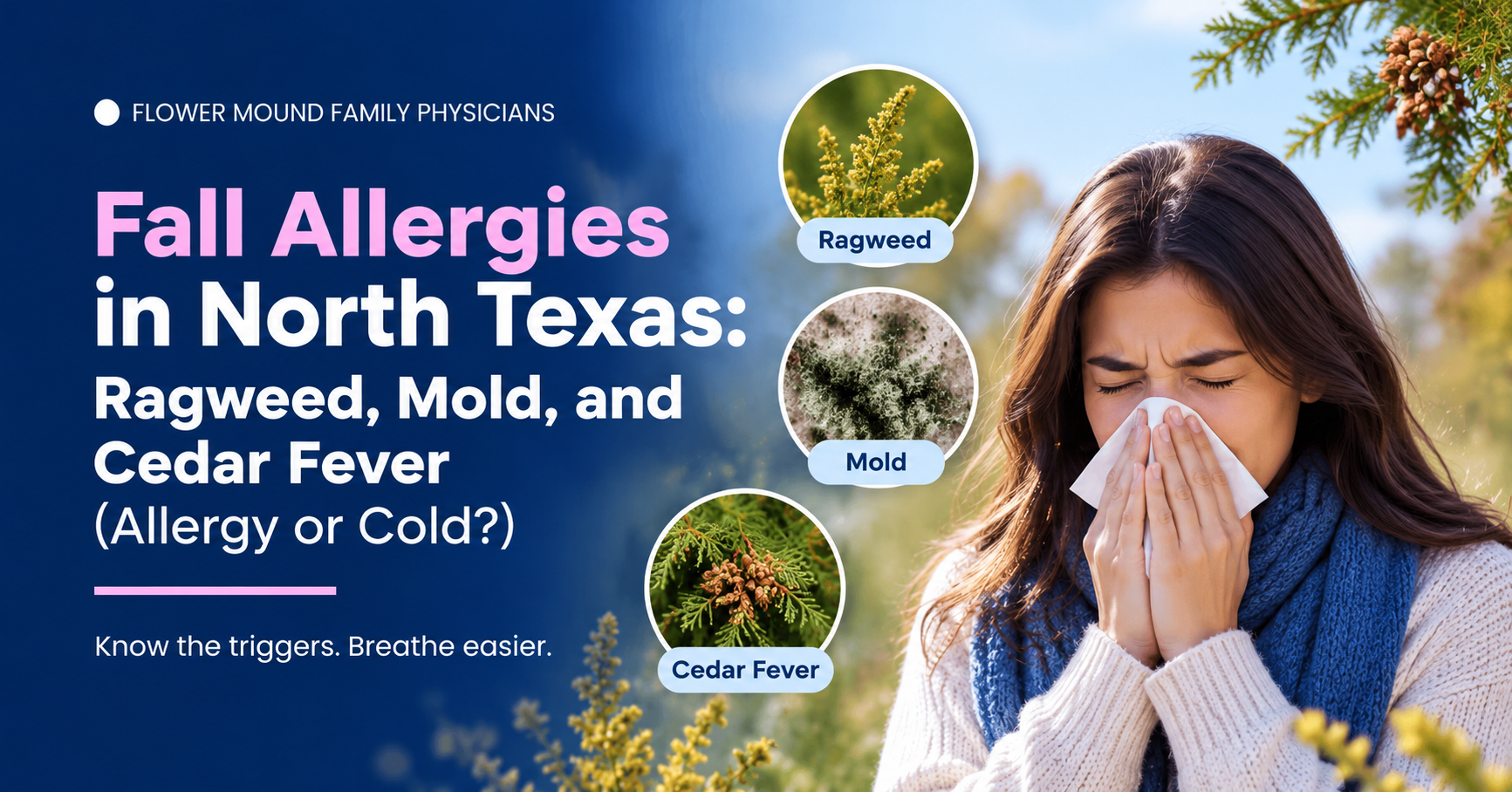
Ragweed is everywhere. It grows in vacant lots, along roadsides and in the open fields that still surround a lot of Denton County. A single ragweed plant can release up to a billion pollen grains, and the wind carries them for miles. Most people with plant pollen allergies react to ragweed.
Our freezes come late. Ragweed keeps blooming until the first hard freeze kills it. In DFW that freeze comes on average in late November, which gives ragweed a long run. Nationally, fall frost is arriving later than it did a few decades ago, so the season tends to stretch.
There’s barely a break before cedar season. Around the time ragweed dies off, mountain cedar trees in central and north-central Texas start releasing pollen. Cold fronts trigger the release, and the wind carries it across the region for weeks. For allergic North Texans, fall can roll straight into winter misery.
What You’re Allergic To: Ragweed, Mold, and Cedar Fever
Allergen | When it peaks in North Texas | What tends to trigger it |
Ragweed | Late August through the first freeze (often late November) | Dry, breezy days; mornings and early afternoon |
Outdoor mold | Fall, especially after rain | Wet leaf piles, mulch, compost, damp lawns |
Mountain cedar (“cedar fever”) | Late November through February, worst in January | Windy, dry days after a cold front |
Ragweed allergy symptoms
Ragweed brings the classic hay fever picture: sneezing in bursts, a runny nose with clear mucus, itchy or watery eyes, and an itchy throat or ears. Some people also notice that melons, bananas or zucchini make their mouth itch during ragweed season. That’s called oral allergy syndrome. Raw foods share proteins with the pollen, so the immune system mixes them up.
Mold allergies
Fall leaves give mold plenty to feed on, and a rainy week in October can send mold counts up fast. Mold symptoms look a lot like pollen allergies, but they often get worse when you rake leaves, mow, clean out gutters or work in the garden. Mold is also a common asthma trigger.
Cedar fever
Cedar fever is an allergic reaction to pollen from mountain cedar, a type of juniper. Despite the name, it rarely causes a real fever. Most people get a stuffed-up or runny nose, heavy sneezing, itchy eyes, fatigue, and sometimes a sore throat or headache. It can hit people who have never had allergies before, and it often feels more intense than other seasonal allergies. If you run a temperature above 101°F, you’re probably dealing with an infection, not cedar.
Allergies or a Cold? How to Tell the Difference
This is the question that brings most people in. A few clues usually settle it.
Symptom or clue | Allergies | Common cold | Sinus infection |
Itchy eyes, nose or throat | Very common | Rare | Rare |
Nasal mucus | Clear and watery | Clear, may turn yellow | Thick, yellow or green |
Fever | No | Sometimes, low | Sometimes |
Body aches | No | Mild | Mild |
Face pain or pressure | Mild, if any | Mild | Common, often on one side |
How it starts | Suddenly, after time outdoors | Over a day or two | Often after a cold that won’t clear |
How long it lasts | Weeks, as long as the exposure | About 7 to 10 days | More than 10 days, or improves and then gets worse |
Anyone else sick at home? | No | Often | Sometimes |
The two biggest giveaways are itching and timing. Colds rarely itch, and they run their course in about a week. Allergies itch and stay as long as the pollen does. If your “cold” started in mid-September and you’re still sneezing at Halloween, it’s very likely allergies.
Allergies vs. a sinus infection
Allergies can set up a sinus infection by keeping the nasal passages swollen and blocked. Most sinus infections are viral and clear on their own. A bacterial sinus infection is more likely when symptoms last more than 10 days without getting better, or when you start to improve and then get worse again with new fever, facial pain or thick drainage. That pattern deserves a visit.
What Helps: Allergy Relief That Actually Works
Most fall allergy symptoms can be managed with a mix of simple habits and over-the-counter medicine.
Cut down your exposure
- Check the daily pollen count (most local TV weather apps post it) and plan yard work for lower days.
- Keep windows closed and run the AC on high-pollen days. Change your HVAC filter more often in fall.
- Shower and change clothes after time outdoors, especially before bed.
- Wear a mask (an N95 works well) when raking leaves or mowing.
- Wipe down pets that spend time outside. Their coats carry pollen indoors.
- Rinse your nasal passages with a saline spray or sinus rinse. Use distilled or boiled water only.
Over-the-counter medicine
- Steroid nasal sprays (fluticasone, triamcinolone, budesonide) are the most effective single option for nasal allergy symptoms. They work best used daily, and they take a few days to reach full effect.
- Non-drowsy antihistamines (cetirizine, loratadine, fexofenadine) help with sneezing, itching and a runny nose.
- Antihistamine eye drops such as ketotifen help with itchy, watery eyes.
- Decongestants can help with a stuffy nose for a few days. Pseudoephedrine, kept behind the pharmacy counter, works better than oral phenylephrine, which an FDA advisory panel found ineffective in 2023. Decongestants can raise blood pressure and heart rate, so check with your doctor first if you have high blood pressure, heart disease or glaucoma. Don’t use decongestant nasal sprays for more than three days in a row, because they can cause rebound congestion.
Start early. If you know cedar season wrecks you every year, start your nasal spray a week or two before symptoms usually begin, in late November or early December. It works much better as prevention than as a rescue.
When to See a Doctor About Allergies
Over-the-counter treatment is enough for many people. Make an appointment if:
- Symptoms last more than two weeks or don’t improve with over-the-counter medicine
- You keep getting sinus infections or ear infections
- Allergies affect your sleep, work or school
- You’re wheezing, coughing at night, or short of breath
- You have asthma and need your rescue inhaler more often than usual
- You run a fever above 101°F or feel worse after starting to improve
- You aren’t sure which medicines are safe with your blood pressure, pregnancy or other conditions
Allergies and asthma often go together. Pollen and mold can set off asthma attacks, and fall is a common time for flare-ups. If you have trouble breathing, chest tightness or wheezing that your inhaler doesn’t relieve, get care right away.
Your doctor can confirm whether it’s allergies or an infection, recommend a treatment plan, prescribe stronger medicine if you need it, and arrange allergy testing or an allergist referral if your symptoms are severe or last all year. For people with tough seasonal allergies, allergy shots or under-the-tongue tablets can reduce symptoms over time.
Allergy and Sinus Care in Flower Mound, TX
At Flower Mound Family Physicians, Dr. Nazia Malick and Dr. Li Wan see patients from Flower Mound, Highland Village, Lewisville, Argyle and nearby communities for seasonal allergies, sinus problems and common infections. When it’s hard to tell allergies from an infection, our in-house testing can help us sort it out during your visit, so you leave with a plan that fits what you actually have.
Allergies can also come up at your yearly routine health visit. We’ll review what you’re taking and plan ahead for cedar season.
If you’ve been stuck in a sneezing, stuffy loop since September, book an appointment online or call us at 972-539-4875. Our office is at 2609 Sagebrush Drive, Suite 101, Flower Mound, TX 75028.
Frequently Asked Questions
When is fall allergy season in North Texas?
Can allergies cause a fever?
How can I tell if I have allergies or a cold?
Can you develop allergies as an adult?
What is the best allergy medicine for ragweed?
When should I go to the doctor for allergies?
Fall in North Texas means ragweed until the first freeze, mold after every rain, and cedar fever close behind. Knowing which one is bothering you, and whether it’s really allergies at all, makes it much easier to feel better. A daily nasal spray, a few habits that keep pollen outside, and a quick visit when symptoms don’t add up can get you through the season.
If allergies are making this fall miserable, contact Flower Mound Family Physicians and we’ll help you figure out what’s going on.
This article is for general education and isn’t a substitute for personal medical advice. If you have trouble breathing or a high fever, seek medical care promptly.