Ovarian cancer is often called a “silent” disease, but that label isn’t quite accurate. Many women do experience symptoms in the earlier stages of this gynecologic cancer. The real problem is that these symptoms are easy to dismiss, since they overlap with everyday issues like stress, poor digestion, or normal aging. Understanding the specific pattern to watch for can help you and your doctor catch the disease at a stage when treatment is far more effective.
Why Ovarian Cancer Is Often Caught Late
Unlike breast cancer, which can be screened for with a mammogram, or cervical cancer, which is caught early through routine Pap smears, there is no reliable, routine screening test for ovarian cancer in women at average risk. This gap in early detection tools is the single biggest reason ovarian cancer tends to be diagnosed later than other reproductive cancers.
Because there’s no simple blood test or scan to rely on, symptom awareness and regular gynecologic checkups become the two most powerful tools women have. An annual pelvic exam remains one of the best opportunities for a physician to notice something abnormal before symptoms become severe.
The Four Symptoms That Matter Most
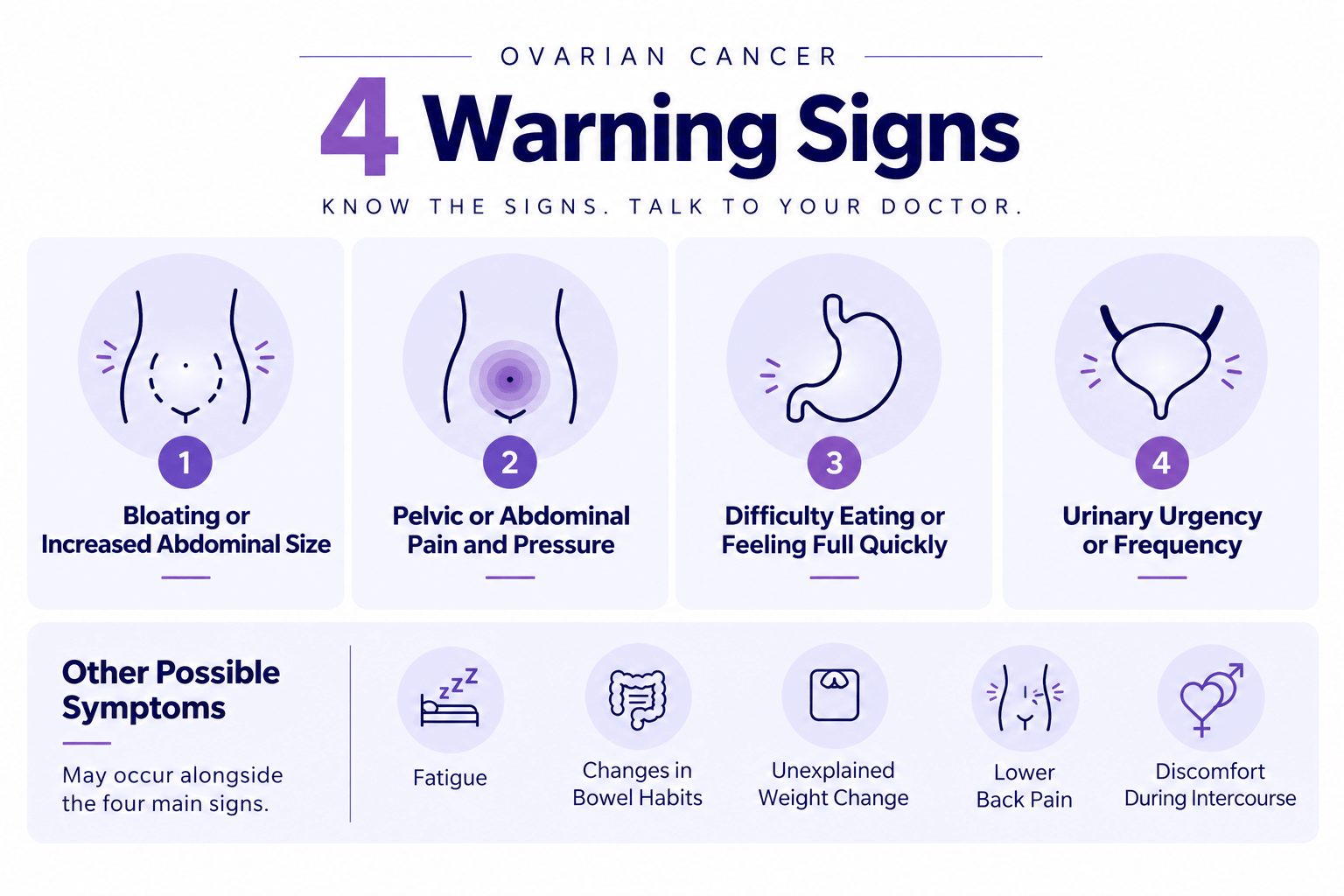
Medical researchers have identified four symptoms that appear more frequently in women with ovarian cancer than in the general population. Individually, each is common and usually has nothing to do with cancer. What matters is the combination and persistence of these symptoms new to you, and not going away.
Bloating or increased abdominal size. This isn’t the occasional post-meal bloat everyone experiences. It’s a persistent fullness or visible swelling in the abdomen, sometimes noticeable through clothing fitting differently around the waist.
Pelvic or abdominal pain and pressure. A dull ache or heaviness in the lower abdomen or pelvis that lingers for days or weeks, rather than symptoms that come and go quickly.
Difficulty eating or feeling full quickly. Finishing far less of a meal than normal, or losing your appetite for no clear reason, especially when it becomes a consistent pattern.
Urinary urgency or frequency. A sudden need to urinate more often than usual, without the burning or discomfort typically associated with a urinary tract infection.
Other, less specific symptoms sometimes reported alongside these four include persistent fatigue, changes in bowel habits, unexplained weight change, lower back pain, and discomfort during intercourse. These alone rarely point to ovarian cancer, but combined with the four core symptoms above, they add to the overall picture your doctor will want to know about.
When Persistent Symptoms Become a Reason to See a Doctor
The general clinical guidance is straightforward: if any of these symptoms occur daily and last more than two to three weeks, it’s time to schedule a visit with your doctor. This threshold exists because these same symptoms have dozens of far more common, benign explanations irritable bowel syndrome, hormonal fluctuations, or a simple stomach bug among them.
The goal isn’t to treat every bout of bloating as an emergency. It’s to notice when something is genuinely different for your body and persistent enough to warrant a conversation, rather than something to wait out indefinitely.
Understanding Your Personal Risk
Certain factors raise the likelihood of developing ovarian cancer and are worth discussing openly with your physician:
Age over 50, with risk increasing further after menopause
A family history of ovarian, breast, or colorectal cancer
A personal history of breast cancer
Obesity
Never having been pregnant
None of these factors guarantee a diagnosis, but they do change how closely a woman and her doctor may want to monitor for early warning signs, and whether earlier or more frequent screening conversations make sense.
The Role of Routine Gynecologic Care
Because there’s no dedicated screening test, routine care becomes the frontline defense. An annual well-woman visit gives your physician the opportunity to perform a pelvic exam, review any new or ongoing symptoms, and factor in your personal and family health history. These visits are also where subtle patterns the kind a woman might not think to mention on their own often surface through a physician’s questions.
Consistency matters here more than almost anywhere else in preventive care. A single normal exam doesn’t rule out future risk, which is why gynecologic health should be revisited every year, not treated as a box to check once and forget.
When to Reach Out to Flower Mound Family Physicians
If you’ve been experiencing bloating, pelvic pressure, appetite changes, or urinary symptoms that haven’t resolved on their own, it’s worth having that conversation sooner rather than later. Flower Mound Family Physicians provides comprehensive women’s healthcare, including pelvic exams, preventive screenings, and same-day appointments for concerns that shouldn’t wait.
The earliest and most common signs of ovarian cancer are bloating, pelvic or abdominal pain, feeling full quickly when eating, and urinary urgency or frequency. These symptoms are considered significant when they are new, persistent, and occur daily for more than two to three weeks.
Can ovarian cancer be detected with a blood test or pap smear?
No. A Pap smear screens for cervical cancer, not ovarian cancer, and there is currently no reliable routine blood test or imaging screening for ovarian cancer in women at average risk. Diagnosis typically relies on symptom evaluation, a pelvic exam, and further testing if abnormalities are found.
Is bloating a serious symptom or is it usually harmless?
Bloating is usually harmless and has many common causes, including diet, hormonal changes, and digestive issues. It becomes a reason to see a doctor when it is persistent, unexplained, lasts more than two to three weeks, and occurs alongside other symptoms like pelvic pain or urinary changes.
At what age should women start worrying about ovarian cancer risk?
Ovarian cancer risk increases with age, particularly after menopause, and most diagnoses occur in women over 50. Women with a family history of ovarian, breast, or colorectal cancer may be considered higher risk at a younger age and should discuss earlier monitoring with their doctor.
How often should women get a pelvic exam to check for ovarian cancer?
Most physicians recommend an annual well-woman visit that includes a pelvic exam, since there is no standalone screening test for ovarian cancer. Regular visits allow a doctor to track changes over time and evaluate any new symptoms as soon as they appear.
Should I see my family doctor or a gynecologist for ovarian cancer symptoms?
Either is an appropriate first step. A family physician can evaluate your symptoms, perform a pelvic exam, review your risk factors, and refer you to a gynecologic oncologist or specialist if further testing is needed.





 The Four Symptoms That Matter Most
 The Four Symptoms That Matter Most