
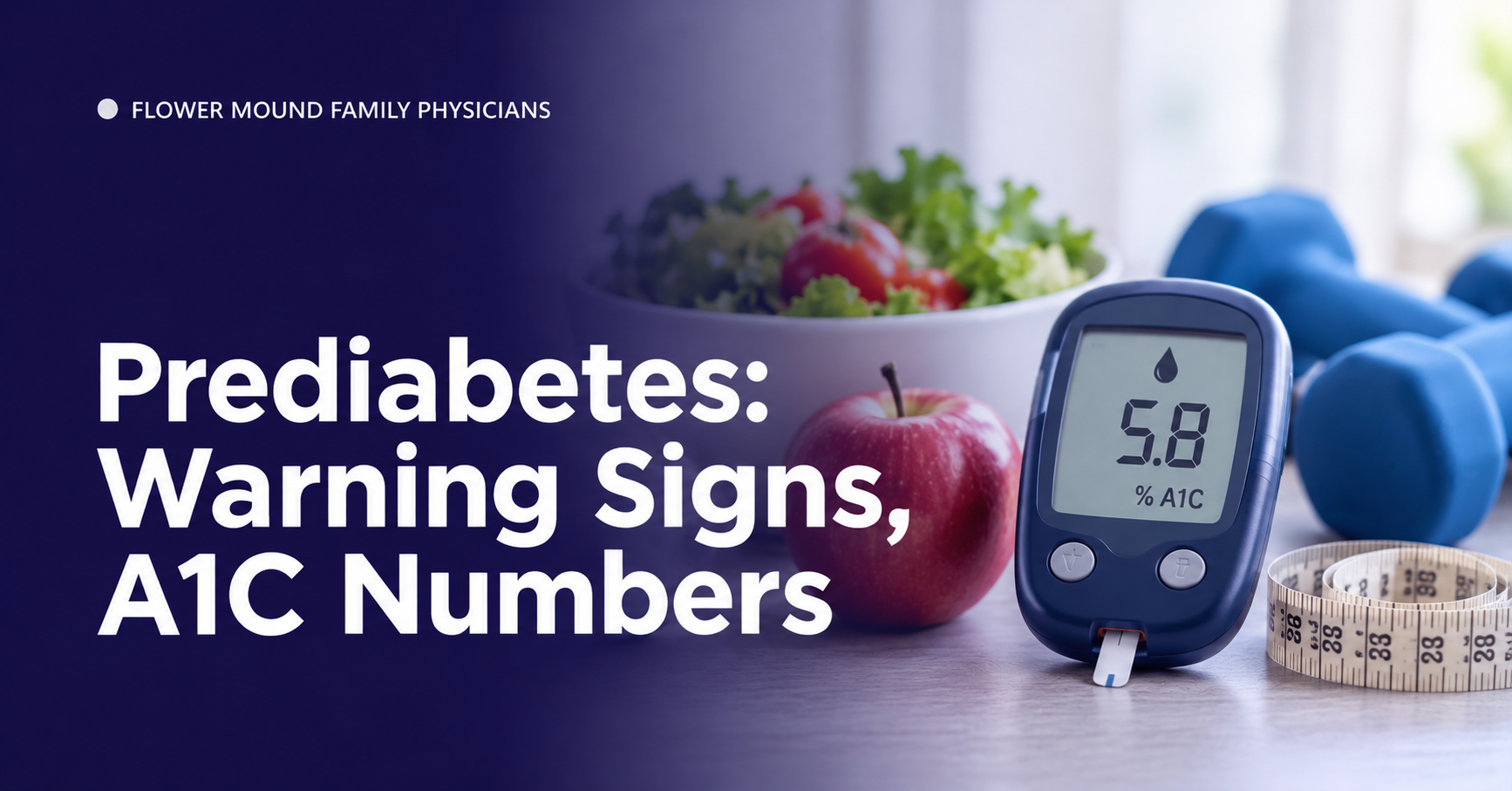


A lot of our patients first hear the word “prediabetes” at a routine physical. They came in feeling fine, had standard bloodwork, and a few days later got a portal message saying their A1C was 5.9%. The usual reaction is some mix of “What does that mean?” and “But I feel completely normal.”
Both reactions make sense. Prediabetes rarely causes symptoms, which is exactly why so many people have it without knowing. It’s also one of the most fixable diagnoses in medicine. Found early, it can often be turned back to normal blood sugar with changes that fit into real life.
November is American Diabetes Month, so here’s a clear guide to what prediabetes is, what your numbers mean, who should get tested, and what actually works to bring blood sugar down.
What Is Prediabetes?
Prediabetes means your blood sugar is higher than normal but not yet high enough to be called type 2 diabetes. Usually it starts with insulin resistance. Your body still makes insulin, but your cells don’t respond to it as well, so sugar stays in the bloodstream longer than it should. Your pancreas works harder to keep up, and over the years it can fall behind.
It’s very common. According to the CDC, roughly 98 million American adults, more than 1 in 3, have prediabetes, and more than 8 in 10 of them don’t know it. Without changes, many people with prediabetes go on to develop type 2 diabetes within a few years. Even before that point, higher blood sugar is linked to a greater risk of heart disease and stroke.
The good news is that prediabetes is a warning, not a verdict.
Prediabetes A1C Range and Blood Sugar Numbers
Three blood tests are used to check for prediabetes. You only need one of them, and your doctor will usually confirm an abnormal result.
|
Test |
Normal |
Prediabetes |
Diabetes |
|
A1C (average blood sugar over about 3 months) |
Below 5.7% |
5.7% to 6.4% |
6.5% or higher |
|
Fasting blood sugar (no food for at least 8 hours) |
Below 100 mg/dL |
100 to 125 mg/dL |
126 mg/dL or higher |
|
Oral glucose tolerance test (2 hours after a sugar drink) |
Below 140 mg/dL |
140 to 199 mg/dL |
200 mg/dL or higher |
Ranges from the American Diabetes Association. A diabetes diagnosis normally needs two abnormal results.
Understanding your A1C
The A1C test is the one most people get at a yearly physical, because you don’t need to fast for it. It measures how much sugar is attached to your red blood cells, which reflects your average blood sugar over the past two to three months.
Where you land inside the prediabetes range matters. An A1C of 5.7% and an A1C of 6.3% are both “prediabetes,” but the second is much closer to diabetes and calls for a more active plan. Ask your doctor for your actual number, not just whether it was flagged.
A1C can read falsely high or low in some situations, including pregnancy, recent blood loss or transfusion, some types of anemia, and certain inherited hemoglobin variants. If your result doesn’t fit the rest of the picture, your doctor may check a fasting glucose instead.
Prediabetes Warning Signs: What to Watch For
Most people with prediabetes have no symptoms at all. That’s why testing matters more than waiting to feel something. Still, a few clues are worth paying attention to:
- Darkened, velvety skin on the back of the neck, in the armpits or groin. This is called acanthosis nigricans, and it’s a common sign of insulin resistance.
- Skin tags, especially many of them around the neck and underarms.
- Weight gain around the waist that’s hard to shift.
- Energy crashes or strong cravings a couple of hours after carb-heavy meals.
- Fatty liver found on an ultrasound or in liver blood tests.
- High triglycerides or low HDL (“good”) cholesterol on a lipid panel.
If you notice the classic diabetes symptoms, such as constant thirst, frequent urination (especially at night), blurry vision, slow-healing cuts, or unexplained weight loss, that may mean blood sugar has already climbed into the diabetes range. Don’t wait for your annual visit. Make an appointment soon.
Who Should Get Tested for Prediabetes?
The American Diabetes Association recommends testing for all adults starting at age 35, and earlier for anyone with risk factors. The U.S. Preventive Services Task Force advises screening adults 35 to 70 who have overweight or obesity. If your results are normal, retesting at least every three years is reasonable. If you have prediabetes, plan on checking at least once a year.
Talk to your doctor about earlier or more frequent testing if any of these apply:
- Overweight or obesity (BMI 25 or higher, or 23 or higher for Asian Americans)
- A parent, brother or sister with type 2 diabetes
- Physical activity fewer than three times a week
- High blood pressure, low HDL cholesterol or high triglycerides
- Gestational diabetes during a pregnancy, or a baby who weighed more than 9 pounds
- Polycystic ovary syndrome (PCOS)
- Fatty liver disease
- Black, Hispanic/Latino, Native American, Asian American or Pacific Islander background, groups that carry a higher risk of type 2 diabetes
That last point matters here in North Texas, where many families have Hispanic heritage and type 2 diabetes runs in the family for a lot of our patients. A family history is a reason to test early. It doesn’t mean diabetes is guaranteed.
Can Prediabetes Be Reversed? Yes, Often.
This is the part we most want patients to hear. The landmark Diabetes Prevention Program study found that people with prediabetes who lost a modest amount of weight and stayed active cut their risk of developing type 2 diabetes by 58%. For adults over 60, the reduction was 71%. Those results did better than medication alone.
You don’t need a dramatic makeover. Here’s what moves the numbers.
1. Lose 5% to 7% of your body weight
For someone who weighs 200 pounds, that’s 10 to 14 pounds. Losing weight around the middle does the most for insulin resistance, and the benefit starts with the first few pounds. If weight loss has been a struggle, a physician-guided weight loss program can make it more realistic, with a plan built around your health and any medications that may help.
2. Move 150 minutes a week
That’s about 30 minutes, five days a week. Brisk walking counts. Muscles use sugar for fuel, so even a 10-minute walk after dinner lowers your blood sugar after that meal. Adding strength training twice a week helps your muscles take up sugar more efficiently.
3. Change what’s on the plate, not just how much
- Fill half your plate with non-starchy vegetables.
- Choose fiber-rich carbs such as beans, lentils, oats, and whole grains over white bread, white rice and tortillas made from refined flour.
- Cut back on sweet drinks: soda, sweet tea, juice and specialty coffee drinks. For many people this one change makes a visible difference in their A1C.
- Eat protein at each meal, which keeps blood sugar steadier and helps with hunger.
Our post on building healthier eating habits with your primary care physician has more practical ideas.
4. Sleep and stress count too
Regularly sleeping less than six hours, untreated sleep apnea and chronic stress all push blood sugar up. If you snore loudly or wake up tired no matter how long you sleep, mention it to your doctor.
5. Quit smoking
Smoking increases insulin resistance and raises the risk of type 2 diabetes. Quitting helps your blood sugar along with your heart and lungs.
When medication makes sense
For some people, especially those under 60 with a higher BMI, an A1C near 6.4%, or a history of gestational diabetes, your doctor may recommend metformin alongside lifestyle changes. It’s an inexpensive, long-established medicine that helps lower the risk of moving on to diabetes. It works best together with lifestyle changes, not instead of them.
How Long Does It Take to Lower Your A1C?
Because A1C reflects the past two to three months, it’s usually rechecked about three months after you start making changes. Many people see their A1C drop by a few tenths of a point in that first round. A move from 6.1% to 5.7% or below is a realistic goal for a lot of patients who stick with a plan.
After that, keep testing at least once a year, even once your numbers are back to normal. The habits that brought them down are the ones that keep them there.
Prediabetes Testing and Care in Flower Mound, TX
At Flower Mound Family Physicians, Dr. Nazia Malick and Dr. Li Wan help patients from Flower Mound, Highland Village, Lewisville, Argyle and nearby communities find and manage prediabetes before it turns into diabetes.
Blood sugar screening is part of your yearly routine health visit, and our in-house testing means less running around for labs. If your numbers are elevated, we’ll explain exactly where you stand, build a realistic plan with you, and recheck on a schedule. If you already have type 2 diabetes, high blood pressure or high cholesterol, we also provide ongoing care for chronic medical conditions.
If it’s been more than a year since your last blood sugar test, or you’ve never had one, book an appointment online or call us at 972-539-4875. Our office is at 2609 Sagebrush Drive, Suite 101, Flower Mound, TX 75028.
Frequently Asked Questions
What A1C level is considered prediabetes?
What are the first signs of prediabetes?
Can prediabetes be reversed?
How fast can I lower my A1C?
What is a normal fasting blood sugar?
How often should I get tested for prediabetes?
Do I need medication for prediabetes?
Prediabetes is common, it’s usually silent, and it’s often reversible. Know your A1C, understand where it falls, and act on it early. A modest amount of weight loss, regular walks, fewer sweet drinks and a recheck in three months can change where your health is headed.
If you don’t know your numbers, now is a good time to find out. Contact Flower Mound Family Physicians to schedule a blood sugar test and a plan that works for you.
This article is for general education and isn’t a substitute for personal medical advice. If you have symptoms of high blood sugar, please contact your doctor.