
Skin cancer is the most commonly diagnosed cancer in the United States, yet it’s also one of the most preventable and treatable when it’s caught early. Because the first signs often appear as nothing more than a new mole or a small change in the skin, many people don’t realize something is wrong until the condition has progressed. Understanding the different types of skin cancer and knowing what to look for is one of the simplest ways to protect your long-term health.
The Three Most Common Types of Skin Cancer
1. Basal Cell Carcinoma (BCC)
Basal cell carcinoma is the most common form of skin cancer, typically developing in areas that get frequent sun exposure, such as the face, ears, neck, and hands. It often appears as a small, pearly or waxy bump, a flat flesh-colored lesion, or a sore that heals and then reopens. BCC grows slowly and rarely spreads to other parts of the body, but it can cause significant local damage to skin and tissue if left untreated for a long time.
2. Squamous Cell Carcinoma (SCC)
Squamous cell carcinoma is the second most common type and also tends to appear on sun-exposed areas of the body. It often looks like a firm, red nodule, a scaly patch, or a sore that doesn’t heal. Unlike BCC, SCC has a higher chance of spreading to other parts of the body if not treated promptly, which makes early diagnosis especially important.
3. Melanoma
Melanoma is far less common than BCC or SCC, but it’s the most dangerous form of skin cancer because it’s more likely to spread to other organs. Melanoma often develops in an existing mole or appears as a new dark spot on the skin. It’s frequently identified using the “ABCDE” warning signs:
- A – Asymmetry: One half of the mole doesn’t match the other
- B – Border: Edges are irregular, blurred, or notched
- C – Color: Uneven color, with shades of brown, black, tan, or even red or blue
- D – Diameter: Larger than about 6mm (roughly the size of a pencil eraser)
- E – Evolving: Any change in size, shape, color, or symptoms like itching or bleeding
Why Early Detection Matters So Much
The outcomes for skin cancer differ dramatically depending on how early it’s caught. Basal and squamous cell carcinomas are highly treatable when identified early, often requiring only a minor in-office procedure. Melanoma, when caught in its earliest stages, also has a very high survival rate but that rate drops significantly the longer it goes unnoticed and untreated.
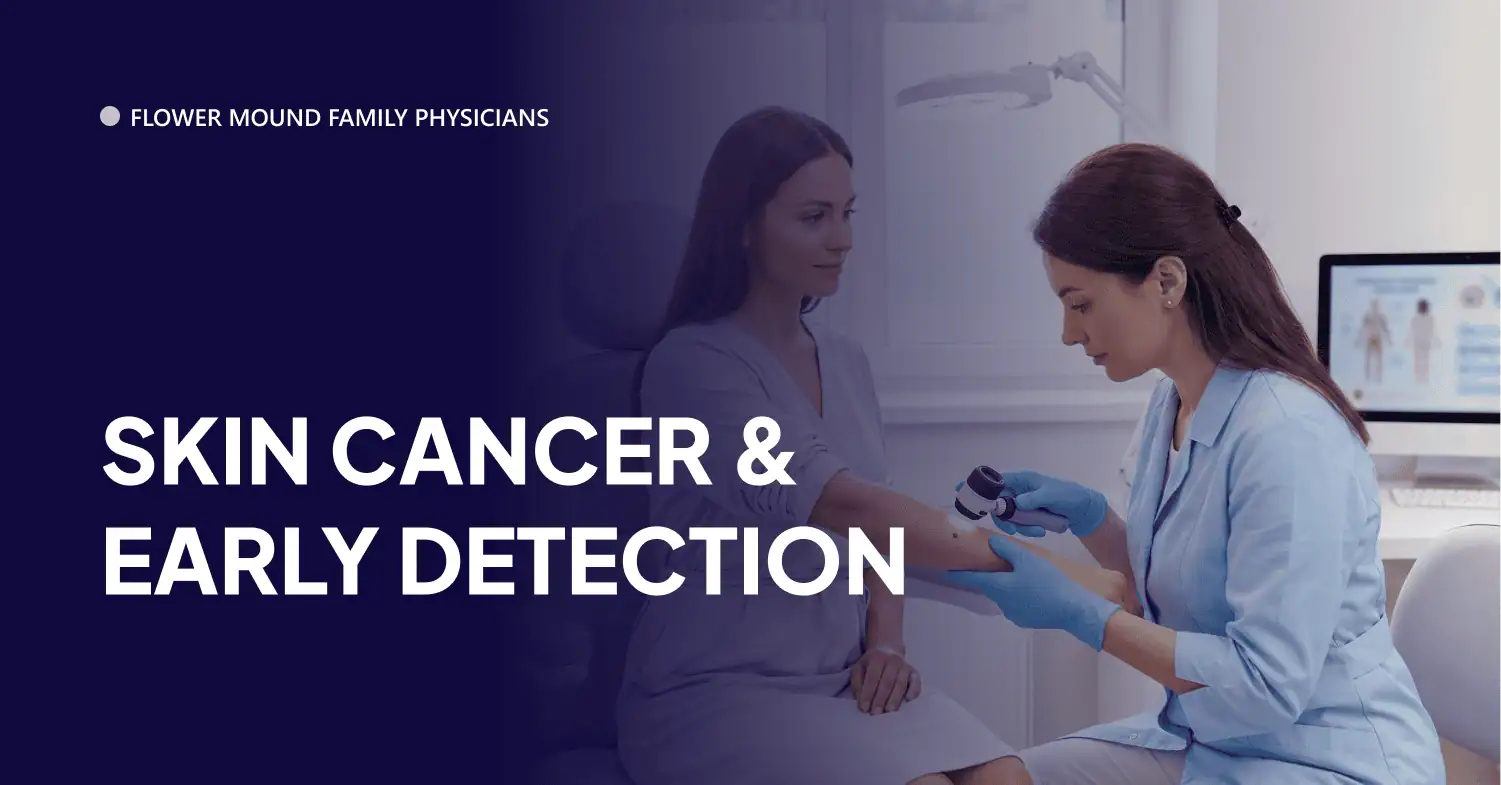
This is why regular skin checks matter just as much as at-home awareness. A trained physician can spot subtle warning signs that are easy to miss on your own, especially in areas that are hard to see, like your back, scalp, or behind the ears.
What Puts You at Higher Risk
Certain factors increase the likelihood of developing skin cancer, including:
- A history of sunburns, particularly during childhood
- Frequent, unprotected sun exposure or tanning bed use
- Fair skin, light-colored eyes, or naturally blonde or red hair
- A family history of skin cancer
- A large number of moles or atypical-looking moles
- A weakened immune system
Since sun exposure is one of the most significant and preventable risk factors, understanding UV radiation and how it affects your skin is a critical part of prevention, not just detection.
How to Protect Yourself Between Screenings
- Apply broad-spectrum sunscreen daily, even on cloudy days
- Wear protective clothing and a wide-brimmed hat during extended sun exposure
- Avoid tanning beds
- Perform monthly self-exams, checking your entire body, including your scalp, palms, soles, and the skin between your toes
- Schedule a professional skin check, especially if you notice any new or changing spots
Early detection isn’t limited to skin cancer alone; the same principle applies across many conditions, from breast cancer to cardiovascular disease. Catching a problem in its earliest stage is consistently one of the biggest factors in a positive outcome.
Final Thoughts
Most skin cancers are highly treatable when caught early, but that requires paying attention to changes in your skin and not waiting until something feels seriously wrong. Alongside daily sun protection, routine screenings and age-appropriate exams are one of the most effective tools available for catching skin cancer before it progresses.
At Flower Mound Family Physicians, skin checks and cancer screenings are part of our broader routine health services, helping you stay on top of your health with regular, preventive care. If it’s been a while since your last skin check, now is a good time to schedule one.
FAQs
The three most common types are basal cell carcinoma (BCC), squamous cell carcinoma (SCC), and melanoma. BCC and SCC are often grouped together as non-melanoma skin cancers and are the most prevalent, typically appearing on sun-exposed areas of the body.
Melanoma is considered the most serious form. It develops in the cells responsible for producing pigment in the skin, grows quickly, and is capable of spreading through the lymph nodes to internal organs which is why catching it early makes such a significant difference in outcomes.
It varies by type. The most common early sign is simply a change in an existing spot, a mole, freckle, or beauty mark that starts to look different than it used to, usually as a result of accumulated sun damage over time. Basal cell carcinoma often looks like a pearly bump, squamous cell carcinoma can appear as a rough, scaly patch, and melanoma typically shows up as a mole that’s changing in size, shape, or color.
Usually not. Skin cancer almost never causes pain in its earliest stage, itching, bleeding, or discomfort tends to appear only as it develops further which is exactly why visual self-checks matter more than waiting for a symptom to show up.
While there’s no single official guideline, many doctors recommend checking your own skin regularly preferably about once a month paying attention to any spot that’s new or changing in size, shape, or color. flowermoundfamilyphysicians
It’s a simple framework for spotting melanoma: Asymmetry (one half of the mole doesn’t match the other), Border (edges are irregular or blurred), Color (uneven shading), Diameter (larger than about 6mm, roughly the size of a pencil eraser), and Evolving (any change in size, shape, color, or new symptoms like bleeding or itching).
Certain factors raise the risk significantly. These include a personal or family history of skin cancer, having numerous or atypical moles, fair skin with light hair and eyes, a history of severe sunburns (especially in childhood), extensive sun or tanning bed exposure, and a weakened immune system.
It’s a quick, straightforward visit. A professional skin exam typically takes about 10 to 20 minutes and is considered a key part of preventive healthcare, especially for anyone in a higher-risk category.
In most cases, yes. Skin cancers found through self-exams and professional skin checks tend to be easier to treat, and the earlier they’re identified, the better the treatment outcome tends to be.